


19 November 2026
ReadDPF (diesel particulate filter) – regeneration and clogging
09 November 2026
Contents
- What is the DPF filter?
- What is DPF regeneration?
- How to tell if the car is regenerating?
- Why does the DPF clog?
- What are the symptoms of a clogged DPF?
- Does driving on the highway help?
- Soot and ash – the important difference
- When is forced regeneration done?
- When should the DPF be cleaned or replaced?
- How to extend the life of the DPF?
- A clogged DPF is often a symptom, not the cause
The DPF warning lamp lit up, loss of power, higher fuel consumption and increasingly frequent regenerations – problems with the diesel particulate filter are familiar to many diesel car owners. Often the first reaction is to take the car onto the highway in the hope that the filter will "clean itself". Sometimes this does help, but not always.
The DPF is designed to periodically rid itself of accumulated soot. However, when regenerations are constantly interrupted or the engine has another fault, the filter can gradually become clogged.
How does the DPF work, how can we tell it is starting to cause problems, and when is a visit to the workshop necessary?
What is the DPF filter?
DPF stands for Diesel Particulate Filter, or more precisely the particulate filter used in diesel engines.
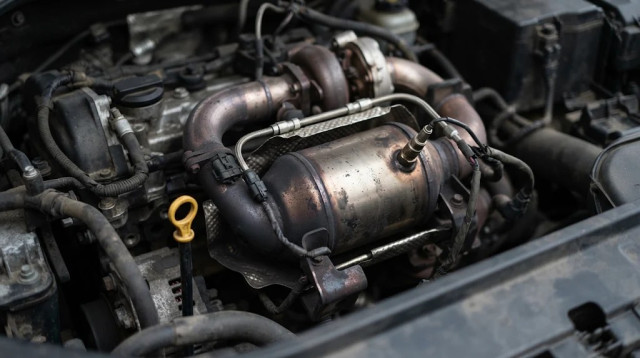
It is located in the exhaust system and its main task is to capture the soot contained in the exhaust gases. This prevents a significant portion of the solid particles from reaching the atmosphere. For example, Bosch describes the DPF as a component that retains soot and periodically burns it off through a process called regeneration.
However, the filter itself cannot collect soot indefinitely. When the accumulation reaches a certain level, it must be burned off. This is where the regeneration process begins.
What is DPF regeneration?
In the simplest terms, regeneration is the filter's "self-cleaning".
The temperature of the exhaust gases is raised sufficiently so that the accumulated soot can be burned. In some systems this is achieved by additional dosing or injection of fuel, which significantly increases the temperature in the exhaust system.
There are generally two main types of regeneration.
Passive regeneration
This can occur naturally during longer driving when the engine has reached operating temperature and the load provides a sufficiently high exhaust gas temperature.
Therefore, a diesel car that is regularly used for longer out-of-town trips often has better conditions for normal DPF operation than a car that mostly covers just a few kilometers in the city.
Active regeneration
When the electronics detect sufficient soot accumulation, the engine can initiate active regeneration itself.
The system changes certain operating parameters to raise the temperature in the exhaust system and burn the accumulated particles.
In many cars the driver does not even receive a direct notification that regeneration has begun.
How to tell if the car is regenerating?
Behavior varies between models, but during active regeneration you may notice:
- a slightly increased idle speed;
- a higher instantaneous fuel consumption;
- the cooling fan switched on;
- a distinctive stronger smell from the exhaust system;
- a change in engine sound;
- temporary deactivation of the Start/Stop system;
- continued fan operation after parking.
The presence of one of these signs does not necessarily mean DPF regeneration is occurring, but a combination of several can be a good indicator.
If you recognize the process and conditions allow, it is advisable not to turn off the engine immediately. Manufacturers such as Ford also note that stopping the vehicle can interrupt an automatic regeneration that has started.
Why does the DPF clog?
One of the most common reasons is constant short-distance driving.
Imagine a diesel car that every day travels 3–4 kilometers to work and the same distance back. The engine barely reaches normal temperature, the car is parked and the process repeats.
If the system cannot periodically reach the conditions necessary for regeneration, the amount of soot gradually increases. But driving style is far from the only possible cause. The DPF can become overloaded also due to:
- faulty fuel injectors;
- a malfunctioning EGR system;
- a turbocharger problem;
- improper engine operation;
- a damaged exhaust gas temperature sensor;
- a problem with the differential pressure sensor;
- a faulty thermostat;
- use of inappropriate engine oil.
The differential pressure sensor, for example, monitors the filter load and is involved in regeneration management. If it or its connected hoses give incorrect information, the problem can appear as a clogged DPF even though the cause is elsewhere.
What are the symptoms of a clogged DPF?
The first signs are not always dramatic. The driver may initially simply notice that the car regenerates more often.
As soot accumulates, the following may appear:
- The DPF warning light illuminates.
- The Check Engine light comes on.
- Reduced power.
- Sluggish acceleration.
- Increased fuel consumption.
- Frequent attempted regenerations.
- More frequent operation of the cooling fan.
- The engine entering emergency mode.
With severe clogging the car may limit power to protect the engine and the exhaust system. This is no longer a situation where it is sensible to simply drive at higher revs and wait for the problem to disappear.
Does driving on the highway help?
Yes, but only under certain conditions. If the DPF is mainly loaded with soot, the car is mechanically sound and the system still allows normal regeneration, longer driving with a warmed-up engine can help complete the process. However, it is a mistake to assume there is a universal recipe like "20 minutes at 3000 rpm".
The specific conditions for regeneration vary by engine and manufacturer. For example, Ford publishes specific instructions for certain models, which shows why it is important to follow the manual for the particular car. If, along with the DPF warning, the car has significantly lost power, there are other faults or it is in limp mode, a diagnostic check is the better solution.
Soot and ash – the important difference
One of the most common misconceptions is that regeneration makes the DPF completely clean again.
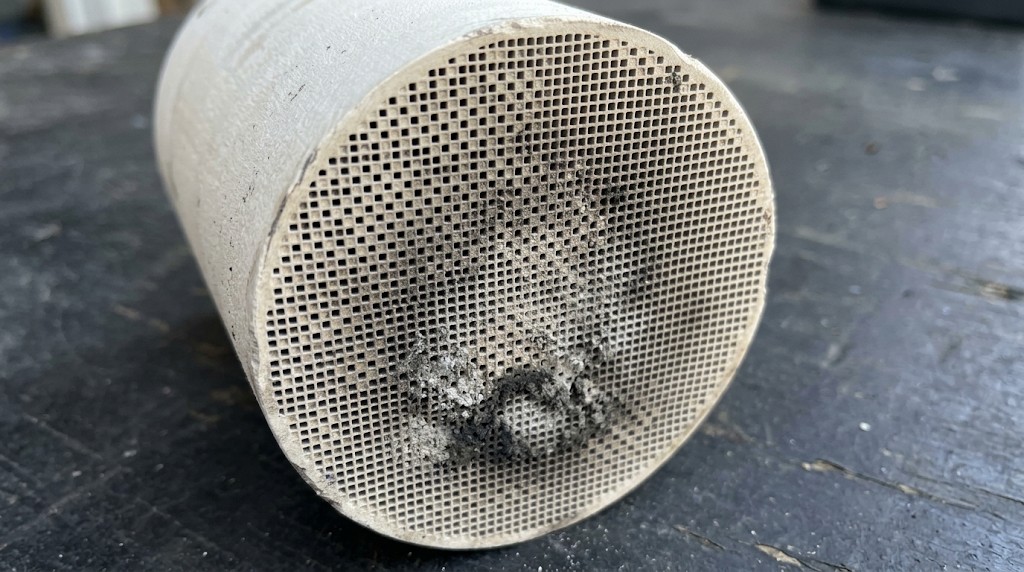
During normal operation soot accumulates, which can be burned off through regeneration. Over time, however, a non-combustible residue remains in the filter – ash. Soot can be burned. Ash cannot. Therefore, on a high-mileage car the DPF may begin to have a reduced capacity even though the system is performing regenerations correctly. In such a case professional cleaning of the removed filter may be necessary or, in cases of serious wear and damage, its replacement.
When is forced regeneration done?
Forced regeneration is initiated via diagnostic equipment and is usually used when the car can no longer carry out the normal process on its own. However, this should not be the first step for every illuminated DPF light.
Before the procedure, the reason why regeneration is not occurring should be checked. If there is a defective injector, a temperature sensor, EGR fault, turbo problem or another malfunction, forcibly heating the system will not remove the cause.
When should the DPF be cleaned or replaced?
Professional cleaning may make sense when the filter is structurally sound but has accumulated a large amount of soot and ash.
Replacement is usually considered in more serious cases, for example:
- a cracked internal structure;
- melted filter;
- mechanical destruction;
- severe oil contamination;
- inability to restore normal flow after proper cleaning.
Therefore correct diagnosis is more important than the automatic decision "clean or new DPF".
How to extend the life of the DPF?
A few habits can reduce the risk of problems:
- use engine oil with the exact specification for the vehicle;
- service the engine on time;
- respond to problems with injectors, EGR or turbo;
- ensure the engine reaches normal operating temperature;
- for mainly urban driving provide periodic longer runs;
- do not systematically interrupt a regeneration that has started;
- do not ignore DPF or Check Engine warnings.
The most important thing is not to treat a clogged DPF as an isolated problem.
A clogged DPF is often a symptom, not the cause
Replacing or cleaning the filter will not give a lasting result if the engine continues to produce an excessive amount of soot or the system cannot perform normal regenerations.
Therefore good diagnostics should include not only a check of the DPF itself but also of the differential pressure, the temperature sensors, the injectors, EGR, the turbocharger and the engine's operating temperature.
If your car regenerates too often, loses power or the DPF warning is already lit on the dashboard, do not wait for the filter to become completely clogged. Computer diagnostics can help find the cause before the problem leads to a more expensive repair. At the OnDrive workshop we offer computer diagnostics as part of our services and describe the process as a combination of inspection, scanning and analysis of detected faults.

Other posts
How to get here

Open in Google Maps
Varna, Hr. Smirnenski Blvd., 29