


19 November 2026
ReadLambda sensor – role, symptoms of failure and effect on fuel consumption
12 November 2026
Contents
- What is the lambda sensor?
- What does "lambda" mean?
- Why do some cars have two lambda sensors?
- What are the symptoms of a faulty lambda sensor?
- 1. Fuel consumption increases
- 2. Check Engine lights up
- 3. Unstable idle
- 4. Jerky or sluggish acceleration
- 5. Smell of unburnt fuel
- 6. More harmful emissions
- How does a faulty lambda sensor affect consumption?
- How can a faulty lambda sensor damage the catalytic converter?
- Could the problem not be the lambda sensor at all?
- How is a lambda sensor checked?
- Can a lambda sensor be cleaned?
- When should a lambda sensor be replaced?
- Don't underestimate the small sensor with big impact
The car starts using more fuel, the engine runs unevenly, and the Check Engine light comes on the dashboard? The first thought is often a problem with the injectors, spark plugs, or the fuel system. However, the cause may lie in a relatively small but extremely important component – the lambda sensor.
This sensor constantly monitors the composition of the exhaust gases and helps the car's computer determine how much fuel should be injected. When it works correctly, we hardly notice it. When it starts to send incorrect values, the effects can be felt both in the engine's behavior and at the gas station.
What exactly is the role of the lambda sensor, how do we recognize a problem with it, and can a faulty sensor really increase fuel consumption significantly?
What is the lambda sensor?
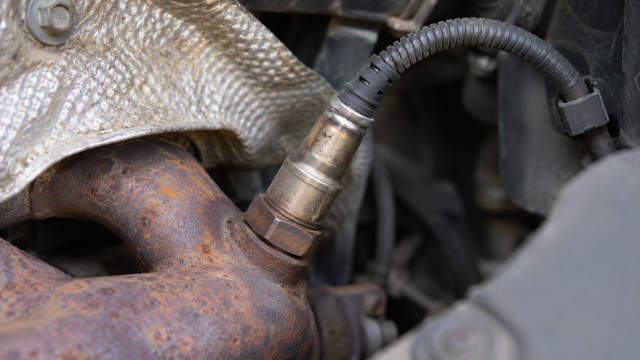
The lambda sensor, also called the oxygen sensor or O2 sensor, is located in the vehicle's exhaust system.
Its main task is to measure the amount of oxygen in the exhaust gases. The obtained information is sent to the ECU – the engine control unit.
Based on this data, the computer continuously adjusts the amount of fuel supplied.
If there is too much oxygen in the exhaust gases, this may mean the mixture is lean. If there is too little – the mixture may be too rich.
The goal is for the engine to run as close as possible to the optimal air–fuel ratio.
This matters for:
- fuel consumption;
- engine power;
- smooth operation;
- the amount of harmful emissions;
- the correct operation and life of the catalytic converter.
In practice, the lambda sensor is one of the components that help the engine continuously "fine-tune" the correct fuel mixture.
What does "lambda" mean?
The name comes from the Greek letter λ.
For a gasoline engine, a value around λ = 1 means the air–fuel ratio is close to what is needed for complete combustion.
For gasoline, an approximate reference ratio of about 14.7 parts air to 1 part fuel by mass is often used. When the mixture contains more fuel than necessary, it is described as rich. When the fuel is relatively low compared to the air – as lean.
However, the engine does not operate constantly at a fixed value. Management changes according to load, temperature, rpm, and many other factors.
Why do some cars have two lambda sensors?
Older cars may have only one, but many modern gasoline models are fitted with at least two.
Lambda sensor before the catalytic converter
This is the sensor that most directly participates in regulating the fuel mixture.
If it starts to send incorrect data, the computer may increase or decrease the amount of fuel incorrectly.
That is why a problem with the front sensor can noticeably affect consumption.
Lambda sensor after the catalytic converter
The second sensor usually monitors the efficiency of the catalytic converter.
It compares the behavior of the exhaust gases after passing through it and allows the electronics to determine whether the emissions control system is working properly.
Therefore, an error on the rear sensor does not always lead to the same symptoms as a failure of the front one.
What are the symptoms of a faulty lambda sensor?
The problem can start gradually. Sometimes the car continues to run relatively normally for a long time while the electronics compensate for the inaccurate data.
However, there are several signs that deserve attention.
1. Fuel consumption increases
This is one of the most characteristic symptoms.
Imagine the engine actually receives enough fuel, but the faulty sensor constantly reports that the mixture is lean.
The ECU reacts as it is programmed – it adds more fuel.
The result can be a noticeable increase in consumption, even though driving style and route have not changed.
If the car suddenly starts using more fuel without an obvious reason, the lambda sensor is one of the components worth checking.
2. Check Engine lights up
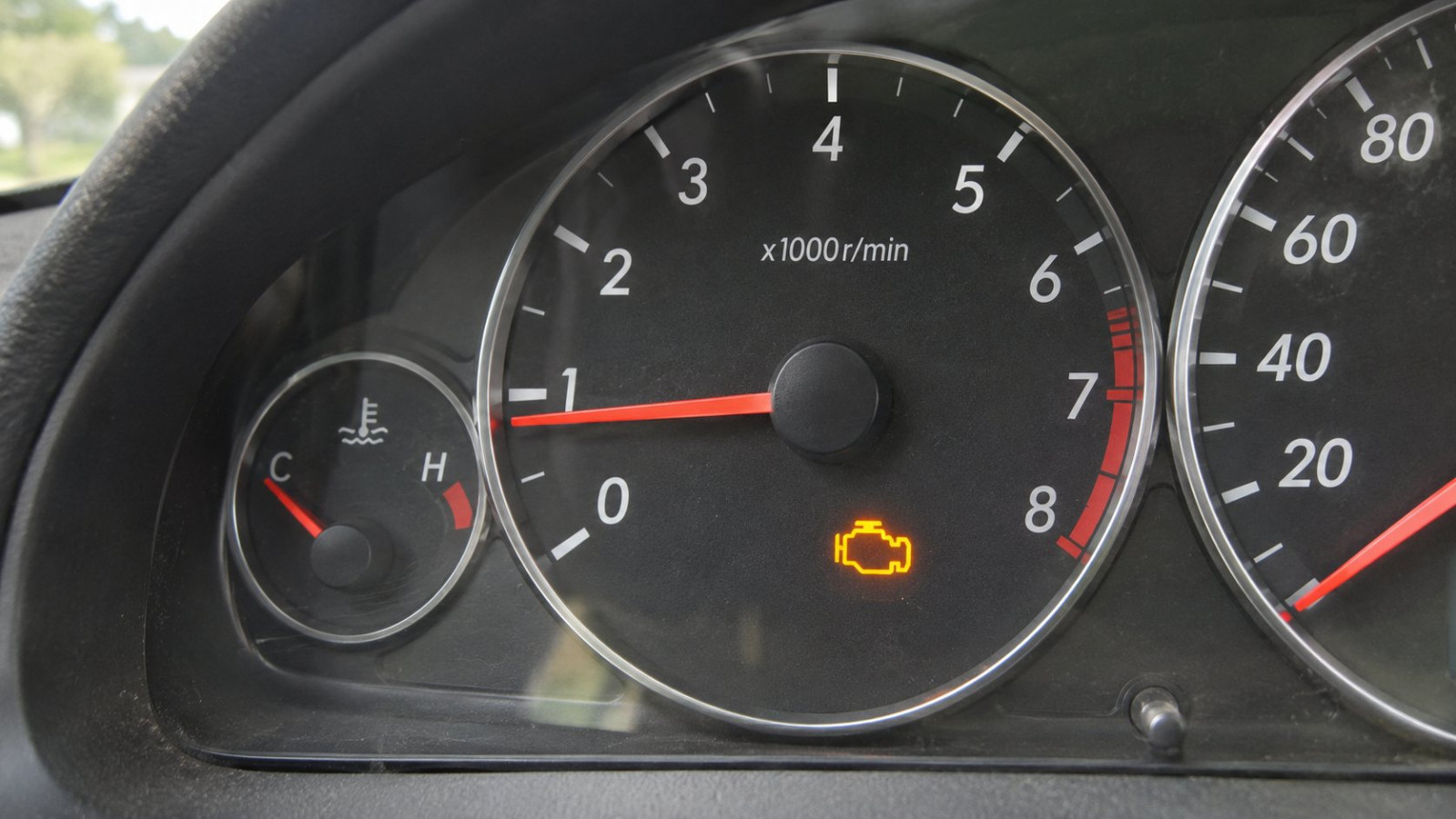
With a problem in the signal or the heater of the lambda sensor, the computer may log an error and turn on the Check Engine light.
However, there is a very important detail here:
- An error related to a lean or rich mixture does not automatically mean the lambda sensor is faulty.
- It is possible that the sensor is working perfectly and simply reporting a problem that originated elsewhere.
For example, a lean mixture can be caused by a vacuum leak or insufficient fuel pressure.
3. Unstable idle
Incorrect fuel corrections can also be felt when the car is stationary.
Possible are:
- fluctuating rpm;
- vibrations;
- slight misfires;
- unstable operation after starting;
- in more severe cases – engine stalling.
However, similar symptoms have many other causes, so a new sensor should not be ordered automatically.
4. Jerky or sluggish acceleration
An incorrect mixture can become more apparent under load.
The car may begin to jerk, respond more slowly to the accelerator pedal, or simply not accelerate as smoothly as before.
In some situations the driver describes the feeling as "the engine wonders whether to go".
Such behavior can also come from spark plugs, coils, injectors, the mass air flow sensor, or the fuel pump, so diagnostics are again key.
5. Smell of unburnt fuel
If the mixture is too rich, some of the fuel may remain unburnt.
This sometimes leads to a stronger smell of gasoline around the car or from the exhaust.
This symptom should not be ignored, especially if combined with increased consumption and Check Engine.
6. More harmful emissions
The lambda sensor has a direct connection to emissions control.
When the fuel mixture is not regulated correctly, the amount of carbon monoxide, hydrocarbons and other undesirable combustion products can increase.
This can create a problem during emissions testing at vehicle inspection.
How does a faulty lambda sensor affect consumption?
This is perhaps the most interesting question for most drivers.
Consumption depends on many factors, so there is no universal rule like "a faulty sensor increases consumption by 20%".
It depends on exactly how the sensor has failed and how the control unit of the specific engine reacts.
If the ECU receives information of a persistently lean mixture, it may start adding fuel.
Then the car can simultaneously:
- use more fuel;
- perform worse;
- accumulate more deposits;
- foul the spark plugs;
- put extra load on the catalytic converter.
It is precisely the last point that can turn a relatively limited problem into a significantly more expensive repair.
How can a faulty lambda sensor damage the catalytic converter?
The catalytic converter is designed to operate under certain conditions.
If the engine runs for a prolonged period with an excessively rich mixture, unburnt fuel can reach the exhaust system.
When it reaches the hot catalytic converter, the temperature can increase significantly.
With prolonged problem this can lead to damage to its internal structure.
Therefore, driving for a long time with a constantly lit Check Engine and obviously incorrect engine operation is not a good idea.
Could the problem not be the lambda sensor at all?
Yes – and this is one of the most common reasons for unnecessary parts replacement.
The lambda sensor measures the result of the combustion process. If the result is wrong, the culprit may be a completely different component.
For example, a lean mixture can be caused by:
- a vacuum leak;
- a cracked intake hose;
- a dirty or faulty mass air flow sensor;
- low fuel pressure;
- clogged injectors;
- an exhaust leak upstream of the lambda sensor.
A rich mixture, on the other hand, can be related to a leaking injector, a problem with fuel pressure, the temperature sensor, or another malfunction.
In such a case the lambda sensor simply reports: "Something is wrong with the mixture".
How is a lambda sensor checked?
The best approach is computer diagnostics and live data analysis.
It is not enough just to read the error code.
It is good to check:
- The signal from the respective lambda sensor.
- Its response speed.
- Short-term fuel trims – STFT.
- Long-term fuel trims – LTFT.
- The operation of the sensor heater.
- Data from the MAF or MAP.
- Engine temperature.
- Fuel pressure if a mixture problem is suspected.
- Presence of vacuum or exhaust leaks.
With modern wideband lambda sensors the diagnostics are different from those for old narrowband sensors, so values must be interpreted according to the specific car.
Can a lambda sensor be cleaned?
On the Internet you can find various "tricks" for cleaning a lambda sensor with cleaning agents, solvents or heating.
This is not a reliable repair method.
The sensing element is sensitive and improper treatment can permanently damage it.
If the lambda sensor is covered with oil, fuel or other deposits, the more important question is why they got there.
A new sensor can also quickly fail if the engine burns oil or there is another unresolved problem.
When should a lambda sensor be replaced?
Replacement is justified when diagnostics show that the sensor itself is indeed not working correctly.
The cause may be:
- absence or incorrect signal;
- excessively slow response;
- a defective heater;
- electrical failure;
- a contaminated or damaged sensing element;
- physical damage to a cable or connector.
It is not necessary to automatically replace all lambda sensors on the vehicle if only one is defective.
Don't underestimate the small sensor with big impact
The lambda sensor is not a component the driver sees or services regularly, but its role is huge.
It continuously participates in regulating the fuel mixture and can directly affect consumption, engine behavior and the operation of the catalytic converter.
If the car suddenly starts using more fuel, runs unevenly or the Check Engine lights up, don't rush to replace the oxygen sensor immediately.
The better approach is to first read the error codes, then analyze the real parameters and only then determine whether the problem is with the lambda sensor or whether it is simply reporting a fault in another system.
An accurate diagnosis can save unnecessary part replacements, and timely fixing of the problem can prevent a far more expensive repair of the catalytic converter or other vehicle components.

How to get here

Open in Google Maps
Varna, Hr. Smirnenski Blvd., 29